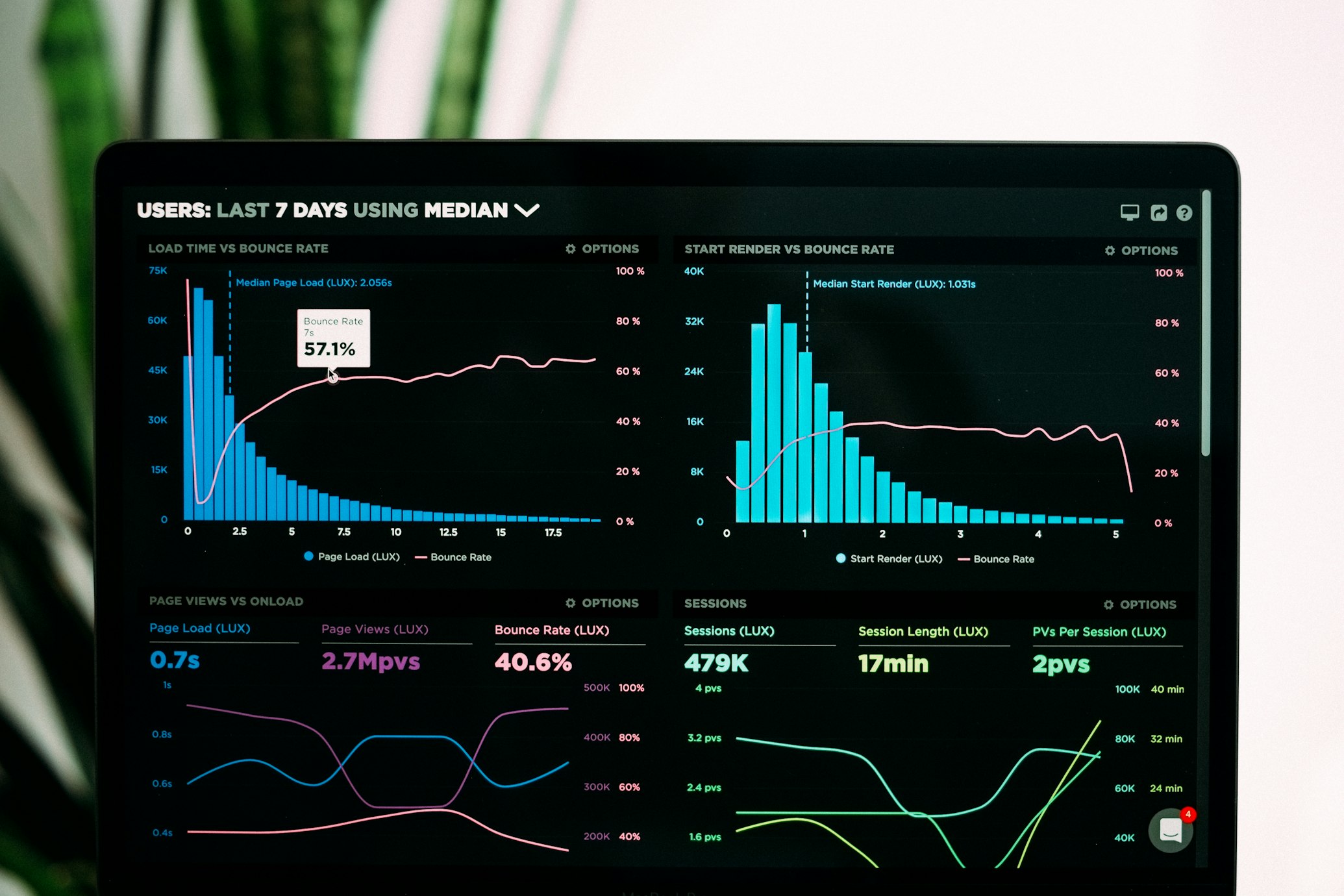
In 2026, your website's speed isn't just about user experience—it's a direct ranking factor. Google's Core Web Vitals have become a critical part of how search engines evaluate and rank your site. If your website loads slowly or feels unresponsive, you're not just frustrating visitors—you're actively hurting your SEO.
Let's break down exactly what Core Web Vitals are, why they matter in 2026, and how you can optimize your website to rank higher and convert better.
What Are Core Web Vitals?
Core Web Vitals are a set of specific factors that Google considers important in a webpage's overall user experience. They measure three key aspects of performance:
📊 Largest Contentful Paint (LCP)
Measures loading performance. To provide a good user experience, LCP should occur within 2.5 seconds of when the page first starts loading.
🖱️ Interaction to Next Paint (INP)
Measures responsiveness. To provide a good user experience, pages should have an INP of 200 milliseconds or less. (Replaces FID in 2026)
📐 Cumulative Layout Shift (CLS)
Measures visual stability. To provide a good user experience, pages should maintain a CLS of 0.1 or less.
Why Core Web Vitals Matter in 2026
Google has made it clear: user experience is a ranking factor. In 2026, Core Web Vitals are more important than ever. Here's why:
- Direct ranking impact: Pages with poor Core Web Vitals scores rank lower in search results
- Mobile-first indexing: Google primarily uses the mobile version of your site for ranking — and mobile users are the most sensitive to speed issues
- User experience signal: Fast, stable pages keep visitors engaged, reducing bounce rates and increasing conversions
- Competitive advantage: In 2026, 67% of websites still fail Core Web Vitals — optimizing yours gives you an edge
The 2026 Statistics: Speed Matters More Than Ever
The numbers for 2026 paint a clear picture of why speed is critical:
- 53% of mobile users abandon sites that take longer than 3 seconds to load
- 70% of consumers say page speed influences their willingness to buy
- 1-second delay in mobile load time can reduce conversions by up to 20%
- 47% of users expect a webpage to load in 2 seconds or less
- 64% of businesses have seen improved SEO rankings after optimizing Core Web Vitals
- Sites that pass Core Web Vitals see an average of 24% lower bounce rates
In 2026, Google's Page Experience signal combines Core Web Vitals with other UX factors like mobile-friendliness, HTTPS, and intrusive interstitials. This means your site's performance directly impacts your search visibility.
How to Check Your Core Web Vitals
Before you can improve your scores, you need to measure them. Here are the best tools for 2026:
- Google PageSpeed Insights: Free tool that analyzes your site and provides specific recommendations
- Search Console Core Web Vitals Report: Shows which pages are performing well and which need improvement
- Chrome DevTools Lighthouse: In-browser tool for detailed performance audits
- Web Vitals Chrome Extension: Real-time monitoring of your site's vitals
- GTmetrix: Comprehensive performance testing with actionable insights
Common Core Web Vitals Issues (and How to Fix Them)
1. LCP Issues (Slow Loading)
Common causes: Large hero images, slow server response times, render-blocking resources
How to fix:
- Optimize and compress images (use WebP format)
- Implement lazy loading for below-the-fold content
- Use a Content Delivery Network (CDN)
- Upgrade your hosting to faster servers
- Minify CSS and JavaScript files
2. INP Issues (Poor Responsiveness)
Common causes: Heavy JavaScript execution, large DOM size, third-party scripts
How to fix:
- Optimize JavaScript — split large files and defer non-critical scripts
- Use browser caching to reduce load on repeat visits
- Minimize DOM size (aim for under 1,500 nodes)
- Audit and remove unnecessary third-party scripts
3. CLS Issues (Layout Shifts)
Common causes: Images without size attributes, ads or embeds that resize, dynamic content injection
How to fix:
- Always include width and height attributes on images and videos
- Reserve space for ads and embeds
- Ensure all animations and transitions are smooth
- Avoid inserting content above existing content
Real Example: Core Web Vitals in Action (2026)
🚀 E-Commerce Store — Before & After Optimization
Before Optimization:
- LCP: 4.8 seconds
- INP: 380 milliseconds
- CLS: 0.25
- Conversion Rate: 1.8%
- Bounce Rate: 62%
After Optimization:
- LCP: 2.1 seconds ✅
- INP: 180 milliseconds ✅
- CLS: 0.06 ✅
- Conversion Rate: 3.4% (↑ 89%)
- Bounce Rate: 41% (↓ 34%)
Revenue Impact: $45,000/year increase
How to Optimize Your Core Web Vitals
Here's a step-by-step approach to improving your Core Web Vitals:
Step 1: Audit Your Current Performance
- Use Google PageSpeed Insights for a detailed report
- Identify which metrics need the most improvement
- Check both desktop and mobile scores
Step 2: Improve LCP
- Optimize hero images (compress, use WebP, set dimensions)
- Implement server-side caching
- Use a CDN to reduce server response time
- Remove unused CSS and JavaScript
Step 3: Improve INP
- Reduce JavaScript execution time
- Use Web Workers for heavy tasks
- Implement code splitting
- Minimize main thread work
Step 4: Improve CLS
- Add proper image and iframe dimensions
- Ensure all ads have reserved space
- Avoid inserting content dynamically above existing content
- Use CSS aspect-ratio property
Step 5: Monitor and Maintain
- Set up regular Core Web Vitals monitoring
- Test performance before launching new features
- Track improvements over time using Google Search Console
The Future of Core Web Vitals
In 2026, Google continues to evolve its ranking factors. Here's what's coming:
- AI-powered performance analysis: Google's AI will increasingly prioritize user-centric metrics
- New metrics: Google is exploring additional metrics like Time to First Byte (TTFB) and overall responsiveness
- Mobile-first: With over 61% of web traffic now mobile, mobile performance is becoming the primary ranking factor
The message is clear: performance optimization is no longer optional—it's essential for SEO success in 2026 and beyond.
The Business Case for Speed
Beyond SEO, fast websites directly impact your bottom line:
- Higher revenue: Amazon found that every 100ms of latency cost them 1% in sales
- Better customer satisfaction: 79% of unhappy customers are less likely to purchase again from a slow site
- Lower costs: Optimized sites use fewer server resources and bandwidth
- Competitive edge: In 2026, only 33% of websites pass Core Web Vitals — be the exception
Key Takeaways
- Core Web Vitals are a ranking factor — ignoring them hurts your SEO
- 2026 benchmarks: LCP under 2.5s, INP under 200ms, CLS under 0.1
- 57% of users won't recommend a slow website — speed affects brand perception
- Optimization is an ongoing process — regular monitoring and updates are essential
🚀 Not Sure Where to Start?
If you're not sure where to start, Theryx Studio offers free consultations to help you identify what's holding your website back.
We'll analyze your Core Web Vitals, identify speed bottlenecks, and give you a clear roadmap to improve your SEO performance.
Book Your Free Consultation →
No obligation. Just honest advice from experts who care about your success.
⚡ Want a website that loads fast and ranks higher?
Let
Theryx Studio build a performance-optimized website that passes Core Web Vitals, delights visitors, and boosts your SEO rankings.
Start Your Project →